Showing posts with label Groves. Show all posts

Friday, May 16, 2025

Belton House and Park.

 May 13th 2025.

We visited the National Trust owned Belton Estate.


Apart from the Mr Colins (BBC Pride and Prejudice) connection there are two other points that interested me.
Family history link with my Great Uncle Albert Groves.
During WW1 the park became the training camp for the newly formed Machine Gun Corps. So Albert would have been there for his training.

The photo shows part of the camp barracks and the temporary branch line from the East Coast mainline.

Also there was a skirmish there during the ECW. It took place on, wait for it, 13th May 1643. This was a significant action as it was Cromwell's first cavalry victory, from which he developed his future battle winning tactics.

The photo of the park shows on the left the area of the MGC camp (now an off limits deer park) and to the right the probable area of the ECW action.
All in all a good day out.


Saturday, September 28, 2024

The life of E.C.Goves update.

My Great Uncle E C Groves(link), one of the three Groves brothers, had his will changed (because his army number had been changed), on 28/8/1917 when he was at Floriana Military Hospital in Malta. These were formerly the Floriana (Lintorn) Barracks. 


Photos of one of the 3 barrack buildings which were the Floriana Military Hospital during WW1. These are now Government buildings so access is limited.  The top parts of these were visible from our Hotel balcony. 


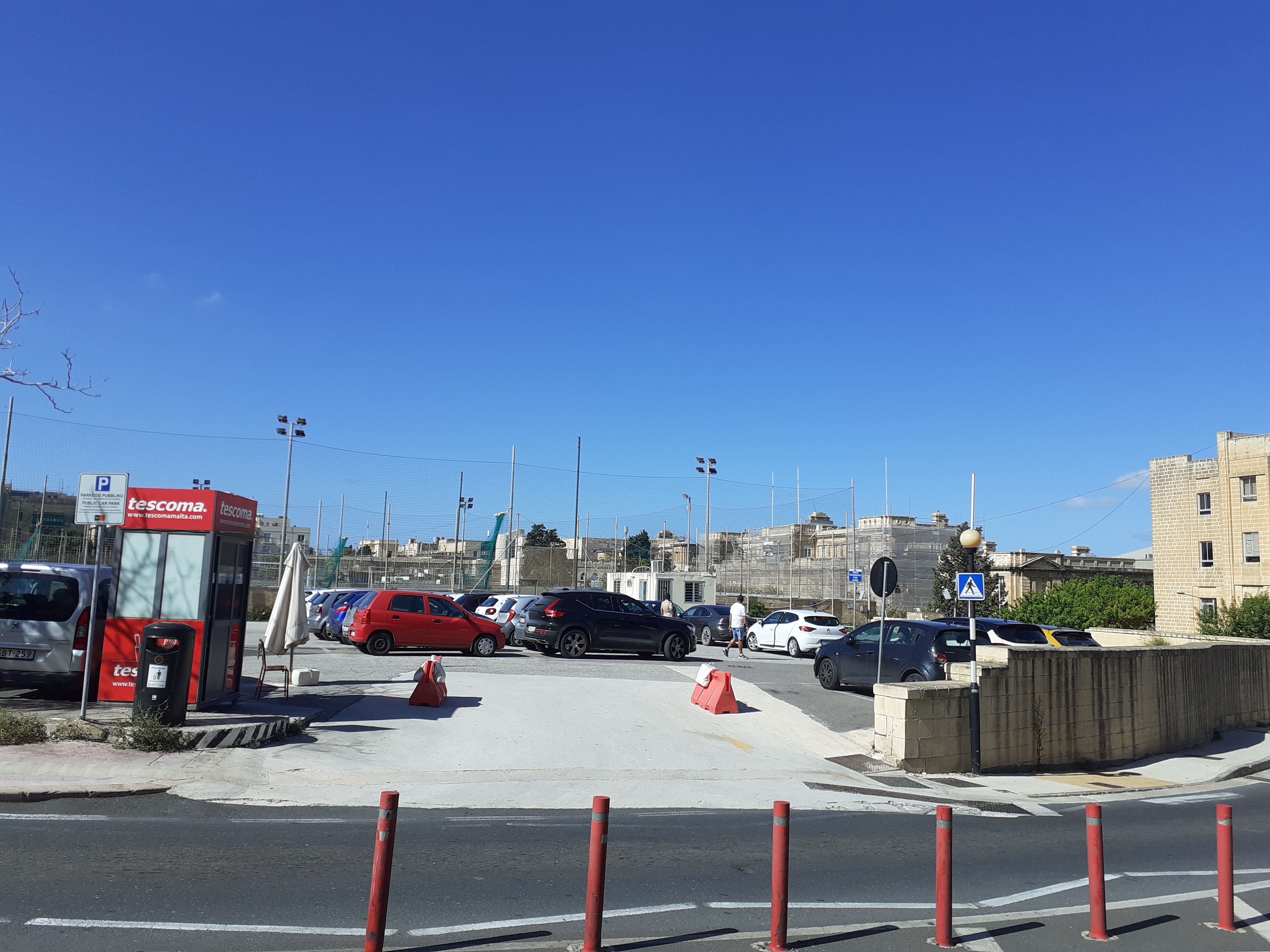
The view today. A car park, a football pitch and the Government buildings part covered in scaffolding.

Dad's view in 1954.  A parade ground and two barrack blocks.  This was the parade for Queen Elizabeth (seated) and the Duke's visit to Malta.
The view in 1917.  The barracks were used as a hospital and the parade ground a tented hospital.


Thursday, February 22, 2024

Michael Palin's new book.

 I got this book for Christmas.  It is a very good read.  


Most interesting for me is the fact that Harry Palin (Michael Palin's great uncle), although he was an ANZAC, was killed during the latter stages of the battle of the Somme, very close to Eaucourt L'Abbaye.  In fact he was killed with in a few days and a few hundred yards of my Great Uncle, Reginald Groves.  See earlier post.  


Thursday, September 13, 2018

Pte A.E.Groves.

The Life of Albert Edwin Groves.
(14/9/1899 – 3/2/1952)
 

He was born 14/9/1899.
1901  census, son age 1.
1911  census, son age 11 and at school.

27/1/16 conscription introduced for all over 18.
With the introduction of conscription and the ever increasing death toll, the method of recruitment and training changed.  Instead of joining a local unit, men joined the army, were trained and then allocated to the units which needed them most.

25/8/1917 His attestation Date [ie 17 yrs and 11 months – see section below].

Surrey Recruitment Registers 1908-1933 Transcription

First Name      Albert Edwin
Last Name       Groves
Age     18 Years 4 Months
Birth Place      Lewisham
Year    1917
Occupation      Cartridge Maker
Unit Or Regiment       Bedfordshire Regiment (3rd Batn)
Regiment         Bedfordshire Regiment (3rd Batn)
Soldier Number           51511
Attestation Place         Lewisham
Attestation Date         25 August 1917
Service            -
Height 5ft 9.75in.
Complexion     -
Hair Colour    
Chest Expansion Inches          4
Distinctive Marks       
Chest Size Inches        36
Eye Colour     
Weight in Pounds       126
Remarks          25 Lethbridge Road Lewisham

Notes   Conscripted men. Recruitment register: No.1 Book. Recruitment numbers 50001-52025.
Reference        2496 / 27
Series   Conscripted men, 2nd November 1917 to 20th February 1918
Page Number  153
Category         Armed forces & conflict
Record collection        Regimental & service records
Collections from         United Kingdom


14/1/1918 he was age 18 and 4 months and was called up [conscripted].

The only photograph we have shows him in the uniform of the Bedfordshire Regiment, his medal card states he was a Private in the Machine Gun Corps [his number was 156003] when he went to the front.

Albert was sent home on compassionate leave as his mother and both brothers had all died quite close to each other.  On his return his uniform was so lousy that his father James, look him out into the yard, sent all the girls in doors, stripped him off, threw buckets of water over him and then burned his uniform.

My mother remembers him talking about Ypres, calling it ‘wipers’. 

After he was called up he went to a Training Battalion [of the Bedfordshire Regiment] and from there volunteered for and was transferred into the M.G.C. around late April / early May 1918.

Bedfordshire Regiment:
3rd (Reserve) Battalion
August 1914 : in Bedford. A training unit, it remained in UK throughout the war. Moved within a few days of declaration of war to Felixstowe for duty with the Harwich Garrison.

He was discharged to Army Reserve, Class Z, on 25th February 1919.

Class Z Reserve was authorised by an Army Order of 3 December 1918. There were fears that Germany would not accept the terms of any peace treaty, and therefore the British Government decided it would be wise to be able to quickly recall trained men in the eventuality of the resumption of hostilities. Soldiers who were being demobilised, particularly those who had agreed to serve "for the duration", were at first posted to Class Z. They returned to civilian life but with an obligation to return if called upon. The Z Reserve was abolished on 31 March 1920.

Later in life he was a painter and worked on the railway. 
He introduces his friend from work, George Earl Willson, to his sister Winifred Hannah Groves, they marry in late 1927.  Their children are Marj, Peter and Shirley.
1928 [age 29] he appears on the voters list at 44 Mount Street.

In 1935 [age 36] he fell from a signal he was painting and was in St Bartholomew’s Hospital for 12 days recovering from head injuries.  He suffered occasional ‘attacks’ as a result of this, for the rest of his life.
1939 WWII age 40.  Fire watcher - civil defence/ARP.  He took my Mum one night to see the London docks burning during the blitz.

Fire Guards (initially called the Fire Watchers Order in September 1940, then the Fire Watcher Service in January 1941 and then reformed as the Fire Guard in August 1941) were responsible for a designated area/building and required to monitor the fall of incendiary bombs and pass on news of any fires that had broken out to the NFS. They could deal with an individual magnesium electron incendiary bomb by dousing them in buckets of sand, water or by smothering.

When used by Fire Guards and Street Fire Party personnel the Zuckerman helmets were marked accordingly with FG or SFP. Bands around the helmet (often in black) would denote seniority within the Fire Guard service.


His medal roll page.

His medal index card.

Groves family tree.

Thursday, December 7, 2017

Pte E.C.Groves.


The Life of Edward Cyril Groves.
(1898 – 9/12/1917)


Edward Cyril Groves was my Great Uncle.  My Grandmother Doris was his younger sister.
He was born in 1898 in Lewisham.

1901  Son age 3 [Ernest C].
1911  Son age 13 at school [Cyril].
1913 age 15 he had probably left school and was working and joined the local Territorials [TF].
His record says he enlisted in Blackheath and was a resident of Lewisham.

He joined the 20th (County of London) Battalion, The London Regiment (Blackheath and Woolwich) T.F. in March/April 1913 with  regimental number No:1223.  His older brother Reg was already a member.  He would have signed up for 4 years [1913-1917].
Before the war the family lived at 25 Lethbridge Road, Lewisham, SE13. 
The HQ of the 20th was at Holly Hedge House just a few streets away.

20th London Regiment Badge.

In August 1913 he was at the 5th London Brigade TF camp in Arundel Park [see group photo] with Reg.  
Arundel training camp.  Summer 1913.

1914 after war was declared the Battalion was mobilized and trained locally until early in 1915 when it moved out of London to Surrey and was soon inspected by Lord Kitchener.


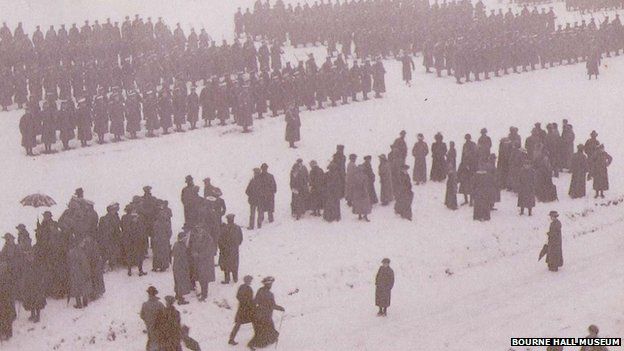
Lord Kitchener inspection
Lord Kitchener Inspects the 2nd London Division.  22 Jan 1915.
Lord Kitchener inspection
In thick snow on Epson Down
Kitchener arrived at 11:00, by which time some of the soldiers had passed out and were taken to the wartime hospital set up at the grandstand on the racecourse. One later died.The purpose of the inspection was to impress the French Minister Millerand but the official party stayed with the troops for only five minutes.
The reason given was the snow, but there may have been another motive.
The 20,000 soldiers on parade only had 100 rifles between them, which were displayed on the front row.
Kitchener knew this and, after walking quickly along the ranks, suggested to his ally that they should call it a day because of the worsening weather.

Training at Merstham, Surrey Feb 1915.  He is on the far right.

24 June 1916 he landed at Le Havre, France, as part of the 2/20th London which was in the 180th Brigade in the 60th [2/2nd London] Division.

60th Division Badge.
180th Brigade patch was a red triangle. 

He crossed the channel in the SS La Marguerite.


SS La Marguerite.

Reg had only gone to France 9 days earlier [15 June], as one of a draft of reinforcements for 1/20th in the 47th Division.  This must have been hard on the family.
5 July 1916 he signed his will as he was going on active service.  His name was Edward Cyril but he signed it Earnest Cyril.  His medal card also says Edward C.

The 60th Division served in France from June 1916 until Nov 1916, but was not involved in any major fighting (the 2/20th held the ‘P’ trench line in front of Vimy Ridge very close to the current Canadian Memorial park).  On 6 July they went into the front line for the first time.  By chance the next sector on the left of the 60th Division was held by the 47th Division, the 1/20th being the right hand battalion.  Two days later they marched off to the Somme.  
Due to the Somme offensive, the Vimy Ridge sector remained relatively quite, but there was plenty of patrolling and trench raiding to be done.


The trenches at Vimy Ridge today.

His records indicate he served with them for all that period.
During a rest period out of the line at the hut camp at Mont St Eloi, he may have seen the King. George V made a tour of the front [8 - 15 Aug] and visited Mont St Eloi on the 9th.  The battalion informally lined the road when he arrived and had a cricket match afterwards.


THE OFFICIAL VISITS TO THE WESTERN FRONT, 1914-1918
Troops line the road to see the King.

The 60th was then transferred to serve in Macedonia from Dec 1916 until June 1917.
They sailed from Marseilles to Salonica by the SS Ivernia 30 Nov 1916.

The Cunard Liner Ivernia.
She was later torpedoed and sunk by a U Boat, 11 Jan 1917, transporting 2,400 troops to Alexandria.


Camp site of the 2/20th.
Macedonia late 1916.
On their way to the front.

On 1 March 1917 a new TF numbering system was introduced and he was renumbered 630169 [so he was definatly in a theater of war before that as his medal card has both of his numbers on it].
During the time he spent in Macedonia, the battalion was digging miles of trenches and defensive positions to create a reserve line some way back from the front.  The greatest enemy at this time was the weather.
1-3 March 1917 The Great Blizzard.  Terrible weather in Macedonia.


The Great Blizzard.  March 1917.
Soon after this he was in hospital.

March 1917.  Breakfast in Macedonia.


6 March 1917 he was admitted to No:31 Casualty Clearing Station from 79th Field Ambulance.  
Rank of Private in B Company.  
Religion C of E.  
He was in Ward D2 with a not as yet diagnosed [condition of the feet].
The record says he was age 21 [wrong he was only 19], had been in the army 4 years [probably correct] and been in the field 8 months [about right].
7 March 1917 he left 31 CCS, and went to a base hospital ?
31 CCS was at Janes, not far from Sarigol in modern day Greece from Aug 1916 to Oct 1918.

10 June 1917. The 60th Division moved to Egypt, arriving at Alexandria 12-18 June 1917.  It joined XX Corps in the E.E.F. [Egyptian Expeditionary Force].
But I do not think Cyril went with them.  I think he was still ill.  His record states he was in Macedonia for an extra 5 months.

28 August 1917 his will is amended by medical staff in Floriana Hospital, Malta.  This was a converted barracks.  Today it is public works offices.  It is possible some military sick were moved to Malta from Macedonia.


Floriana Hospital – Malta.

From his medal roll
1223      1a [France]          24/6/16 – 29/11/16      agrees with 60th history
1223      2a [Macedonia]   30/11/16 – 17/11/17    5 months extra in Macedonia [28/8/17 Malta]
630169  4b [Egypt]           18/11/17 – 9/12/17      only 3 weeks

By the time he rejoined he had missed all the early battles of the campaign.

Third Battle of Gaza. 27 Oct - 7 Nov 1917.
Capture of Beersheba. 31 Oct 1917.
Capture of the Sheria Position. 6 Nov 1917. 


When he arrived in Egypt [18 Nov 1917], the battalion was at Gaza following the Turks how were in full retreat.
They counter attacked 29 Nov to try to retake the key position over looking Jerusalem, the Nebi Samwil Mosque.  A, B and C Companies held the Mosque and the summit of the hill, with D Company in support.  The Turks bombarded the position all morning and then attacked in force twice during the afternoon.  Both times they were driven off with high losses.
The 2/20th had at least 7 men KIA.  They were relieved by the 2/22nd the next day for a few days rest.


Nebi Samwil Mosque before the battle.


He was present for the Capture of Jerusalem. 7 - 9 Dec 1917.


The battle for Jerusalem.

Our oral family history states, that on hearing of his Mother and his Brother’s deaths, he went ‘over the top’ and ‘dun himself in’.
His mother died of cancer in late 1917 and his brother Reg was posted missing on the Somme on 1 Oct 1916 and would have been declared missing, assumed dead about a year later.
Possible result of shell shock as well ??
He was killed in action aged 19 on Sunday 9th December 1917. 
3 men were killed and 14 wounded in the B Company assault on that day.

CWGC record says.  Son of Mr. J. Groves, of 44, Mount St., Charlton, London.
He is buried at the Jerusalem War Cemetery, Israel, in plot R22.  The cemetery is 4.5 km north of the walled city at the north end of the Mount of Olives. 
With the personal inscription “With deepest sympathy from his loving Father and family.”

He is also remembered on the church memorial at The Ascension Church, Dartmouth Row, Lewisham [as Cyril Groves].


His Service Record Documents.

His medal roll.

His medal index card.

List of his effects.


His will.

Memorials.
Church memorial. The Ascension Church, Dartmouth Row, Lewisham.

His original head stone.
The personal inscription at the bottom reads;
“With deepest sympathy
from his loving Father
and family.”


2014 – his new head stone.


Other Items.
Regimental history in which he is mentioned.


Lt Col William Warde-Aldam DSO.
CO 2/20th London.

Capt Maurice Lane MC MM.  
B Company Commander.


Poppies at the Tower of London 2014.

I applied for and had his name added to the Roll of Honour.  His and his brother Cyril's names were read out on November 8th 2014, by  Miss Diana Lees, Director of the Imperial War Museum.  The Last Post was sounded by WO2 [Band Srgt Maj] Ralph Brill, Scots Guards.
To see the video.

To see the full list.


They are numbers 52 and 54.


The Groves Family.


NOTES:


20th London Company locations
HQ, A, B, C and E Coys at Holly Hedge House, Blackheath,
D Coy at New Cross, [2 miles NW]
F and H Coys at Woolwich, [4 miles NE]
G Coy at Catford, [2 miles S] based at St Dunstan’s College

Salonika 1916-17.

The battle of Tumbitza Farm (17 November - 7 December)

The Salonika Force dug-in until the summer of 1916, by which time the international force had been reinforced and joined by Serbian, Russian and Italian units. The Bulgarian attempt at invasion of Greece in July was repulsed near Lake Doiran. At the beginning of Oct 1916, the British in co-operation with her allies on other parts of the front, began operations on the River Struma towards Serres. The campaign was successful with the capture of the Rupell Pass and advances to within a few miles of Serres.
1917
The First Battle of Doiran (22 April - 8 May)
The Capture of Ferdie and Essex Trenches (near Bairakli Jum'a) (15 May)
The Capture of Bairakli and Kumli (16 May)


During 1917 there was comparatively little activity on the British part of the front in Macedonia, due in part to complex political changes in Greece throughout the year. The main fighting took place around Lake Doiran, where the line was adjusted several times by each side early in the year. In April 1917, the British attacked, gained a considerable amount of ground and resisted strong counter-attacks. In May, the Bulgarians attacked the British positions, but were firmly repulsed. The British action in May triggered a series of attacks elsewhere on the front by the other Allies, known as the Battle of Vardar.


Thursday, September 29, 2016

Reginald Groves. 1916.


The Life of Reginald Groves.

(1896 – 1/10/1916)


Reginald Groves was my Great Uncle.  My Grandmother Doris was his younger sister.

He was born in April, May or June 1896 in Woolwich.

1901 census age 5, he is in hospital.

1911census age 15, he is a shop assistant, in a picture framing shop.

At that age he probably joins the local Territorials [TF].

20th (County of London) Battalion, The London Regiment (Blackheath and Woolwich) T.F.

Before the war the family lived at 25 Lethbridge Road, Lewisham, SE13. 

The HQ of the 20th was at Holly Hedge House just a few streets away.

At that time he would have been given a regimental number in the 900-1000 region.

He would have signed up for 4 years [say 1911 to 1915].

In 1913, age 17, he is in the 20th London TF and is at the 5th London Brigade, summer training camp in August at Arundel Park [see group photo].


5/3/1915, the 1/20th is deployed to France as part of the 141st Brigade in the 47th [2nd London] Division.

June 1915, he is age 19, but was not sent to the front as he was not awarded the 1915 Star [medal] and may by then have finished his first 4 year term.  He may have been allowed to leave, for a short time [or not at all] and then re-joined or was recalled as his number [when he went to France] was 4880.  This is the number on his medal card and that block of numbers was not issued until around February 1916.

From his medal roll we know he was in France from 15/6/16 until 1/10/16 and that he had the rank of Private [Pte].  So he must have gone out as part of a draft of reinforcements.  His younger brother Cyril went out to France 9 days later.  This must have been very hard on the family.

He must have joined the battalion at Vimy Ridge – the units of 47th Division were involved in frequent crater-fighting in this sector from April to July 1916, including the major German attack on 21 May.
The trenches at Vimy Ridge today.


His brother Cyril, in the 2/20th moved into this area at the end of July and the 2 battalions were very close to each other for a few days.

In August the 47th division marched south to take part in the Somme offensive. Its first operation was the capture of High Wood on the opening day of the Battle of Flers-Courcelette (15 September). 141 Brigade was given the task of seizing the wood itself, the 1/20th being in the second wave, joining a confused and desperate fight. Casualties were very heavy but, after a renewed bombardment, German troops began to surrender. By the afternoon, 141 Bde held the wood, but was so disorganised by the high number of casualties it had sustained, that it had been formed into a single, composite battalion. Work on establishing a new line beyond the wood was started by a mixed party under Capt H.S. Read of the 1/20th Bn.

From the document recording his affects [he left after he was killed], he was in ‘C’ coy.

Whilst in France he was promoted to Lance Corporal [L/Cpl] as by then he was quite an experienced soldier.  This may have also been a result of the high number of casualties sustained at the battle of High Wood.

He spent just over 15 weeks in France.

1st October 1916, age 20, he was killed in action during the attack on Eaucourt L’Abbaye, part of the latter stages of the Battle of the Somme.

The Somme 1/10/1916.


He is remembered at the Thiepval War Memorial, Somme, France.

Memorial reference.  Pier and Face 13C.

And the memorial at The Ascension Church, Dartmouth Row, Lewisham.


The Church memorial.


Their Regimental badge.


Their 141st Brigade flash.


 Their 47th Division Badge.


 The battlefield today.
Thiepval Memorial.


 His name on the Thiepval War Memorial.
 His medal card.

His medal roll.
List of his effects after he was killed.

The Groves Family.


Poppies at the Tower of London 2014.

I applied for and had his name added to the Roll of Honour.  His and his brother Cyril's names were read out on November 8th 2014, by  Miss Diana Lees, Director of the Imperial War Museum.  The Last Post was sounded by WO2 [Band Srgt Maj] Ralph Brill, Scots Guards.
To see the video.

To see the full list.

They are numbers 52 and 54.